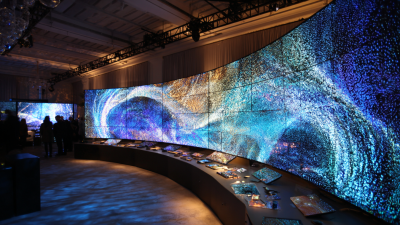
The flat display panel (FDP) industry is really going through some big changes lately. According to a report from MarketsandMarkets, the market for flat displays is expected to hit around $189 billion by 2025 — no small feat! A lot of this growth is fueled by rapid tech advancements. Major players like LG Display and Samsung Electronics are really pushing the envelope when it comes to innovation.
Some of the hottest trends right now include the rise of OLED screens and curved displays. OLED tech, in particular, offers way better contrast and uses less energy, which pretty much resonates with what consumers want these days. But, of course, there are still some hurdles — like the high costs of production. Many manufacturers are kind of caught in that tricky spot trying to get the quality they want without pricing things out of reach.
Sustainability is also becoming a huge deal. Companies are experimenting with eco-friendly materials and greener manufacturing methods. As customers become more aware of environmental issues, businesses really need to step up and adapt. It’s definitely an exciting time for the flat display market, and keeping an eye on these trends is key because things are changing quickly.

Emerging Technologies in Flat Display Panel Manufacturing
The landscape of flat display panel manufacturing is rapidly evolving. One of the most significant trends is the rise of organic light-emitting diode (OLED) technology. OLED panels offer richer colors and deeper blacks compared to traditional LCDs. This technology is paving the way for thinner, more flexible displays. Manufacturers are investing heavily in OLED to improve fabrication techniques and reduce costs.
Another emerging trend is quantum dot technology. Quantum dots enhance color accuracy and brightness. They are increasingly used in high-end displays, improving the viewing experience. This technology leverages nanotechnology to manipulate light at a scale previously unattainable.
When exploring new technologies, it’s essential to consider your specific needs. Think about resolution, refresh rates, and energy consumption. Each type of display has its unique advantages and drawbacks. Also, stay informed about new developments, as the industry changes quickly.
Remember that not every technology suits all applications. Testing various display types can provide insights into their performance. It’s wise to seek professional advice when making decisions. The right choice depends on your context and usage.
Top 10 Flat Display Panel Trends
Advancements in OLED and MicroLED Display Technologies
The advancements in OLED and MicroLED display technologies are reshaping the visual landscape. OLED displays are known for their vibrant colors and deep blacks. These features provide an immersive viewing experience. The flexibility of OLED panels allows for innovative designs, which can bend or curve. However, challenges remain, such as potential burn-in issues and shorter lifespan compared to traditional LCDs.
MicroLED technology is emerging as a formidable competitor. It offers brighter displays and energy efficiency, consisting of tiny individual pixels that enhance contrast and color accuracy. This technology can also be scalable, allowing for diverse applications. Yet, it is still in the early stages. The manufacturing process is complex and costly. Researchers continue to work on improving yield rates.
Overall, while both technologies present exciting opportunities, they also provoke critical questions. How can manufacturers ensure longevity without sacrificing quality? What will it take to make MicroLED more accessible? These queries highlight the ongoing evolution in flat display panel technology. As the industry progresses, the benefits and drawbacks of OLED and MicroLED will become clearer.
Trends in Energy Efficiency and Sustainability for Displays
The trend towards energy efficiency in flat display panels is evident. Manufacturers are focusing on reducing power consumption without sacrificing performance. This shift impacts both production processes and consumer experiences.
Adopting eco-friendly materials is becoming standard practice. Displays are increasingly designed for longevity and recyclability. Sustainable designs not only benefit the planet but also enhance product appeal. This aligns with a growing consumer preference for environmentally responsible choices.
Tips: Consider the impact of your display choice. Look for energy ratings when purchasing screens. Every bit helps in reducing overall energy consumption. Also, explore options for display recycling programs. They can minimize waste and promote sustainable practices.
While advancements are encouraging, there is still a long way to go. Many manufacturers still face challenges in balancing cost and sustainability. Achieving energy efficiency requires ongoing innovation and commitment from all stakeholders. However, the potential benefits for the environment and economy are significant.
The Rise of Interactive and Smart Display Panels
The rise of interactive and smart display panels is transforming various sectors. According to a recent report by MarketsandMarkets, the global smart display market is projected to grow from $5.1 billion in 2020 to $15.3 billion by 2025. This growth reflects the increasing demand for interactive panels in education, retail, and healthcare. Interactive panels enhance user experience by allowing touch inputs and real-time feedback, thus fostering engagement.
Data from display technology experts predict that by 2024, nearly 40% of classrooms will adopt interactive whiteboards. These tools enable dynamic learning and collaboration. However, some educators express concerns over the reliance on technology, suggesting that balance is essential. Similarly, retail spaces are integrating smart display panels for personalized shopping experiences. Yet, there's an ongoing debate about privacy and data security as more information is collected through these devices.
In healthcare, smart displays are improving patient interaction and information sharing. With telemedicine gaining traction, panels that facilitate virtual consultations are in high demand. Still, some healthcare professionals question whether these technologies can truly offer the same level of care as in-person visits. Interactive and smart display panels are reshaping industries, but their implementation requires careful consideration and ongoing evaluation.
Top 10 Flat Display Panel Trends You Should Know About
| Trend |
Description |
Impact |
Future Outlook |
| Interactive Displays |
Increased interactivity for user engagement. |
Enhanced user experience in education and retail. |
Expected growth in digital signage markets. |
| Smart Connectivity |
Integration with IoT and cloud services. |
Better data analytics and remote management. |
Continued emergence of AI-driven displays. |
| High Redundancy and Reliability |
Designs prioritizing fail-safety features. |
Maximized uptime and service reliability. |
Demand for 24/7 operational displays. |
| Sustainable Manufacturing |
Focus on eco-friendly materials and processes. |
Reduced environmental impact and cost savings. |
Increased consumer preference for green products. |
| Ultra High Definition (UHD) |
Adoption of 4K and 8K resolutions in displays. |
Improved visual experience for consumers. |
More content production in high resolution. |
| Flexible Displays |
Emergence of bendable and rollable screen technology. |
New applications for mobile and portable devices. |
Expanding uses in design and architecture. |
| Augmented Reality (AR) Displays |
Integration of AR capabilities in display technology. |
Enhanced interaction through virtual overlays. |
Growth in AR applications across industries. |
| Narrow Bezels |
Trend toward edge-to-edge display designs. |
Increased screen real estate and aesthetic appeal. |
Predicted to become standard in most displays. |
| Improved Color Accuracy |
Advancements leading to better color reproduction. |
Enhances experience for photography and video. |
Growing need in creative arts and production. |
Market Demand and Consumer Preferences for Flat Displays
The flat display panel market is rapidly evolving, influenced by consumer demand and preferences. With the increase in remote work and streaming services, consumers seek larger and higher-quality screens. They desire vivid colors, sharp images, and wider viewing angles. The rise of 4K and even 8K displays illustrates this trend. Yet, not everyone can justify the cost of such technology.
Environmental concerns also shape consumer choices. Many buyers favor energy-efficient displays that have a lower carbon footprint. The push for sustainable materials in manufacturing is gaining traction. While these eco-friendly options appeal to a segment of consumers, they often come at a premium. This creates a dilemma: how do we balance environmental responsibility with affordability?
Moreover, with the surge in gaming and virtual reality, immersive displays are in higher demand. Consumers crave faster refresh rates and lower response times. However, the technology to deliver this may still lag behind. Some users find their current displays inadequate for their needs. This gap highlights a need for continuous improvement in flat display tech. The market's evolution is not just about what’s new, but how well it meets diverse user needs and expectations.
Integration of Artificial Intelligence in Display Technologies
Artificial Intelligence (AI) is changing the landscape of display technologies in significant ways. According to a recent report by ResearchAndMarkets, the integration of AI in display panels is projected to grow by over 27% annually through 2027. This rapid adoption reflects a shift towards smarter solutions in visual technology. AI enhances color accuracy, brightness optimization, and energy efficiency. This transformation is evident in both consumer electronics and industrial applications.
Incorporating AI algorithms allows displays to self-adjust based on ambient light and user behavior. For example, some panels can modify their contrast levels automatically, providing a better viewing experience. However, this integration also raises concerns. The reliance on AI may lead to vulnerabilities, such as privacy issues and data security risks. Additionally, not all display manufacturers have the same level of expertise in AI. As a result, the quality of user experience can vary dramatically across products. This variance calls for increased scrutiny and informed decisions from consumers and industry professionals alike.
Future Prospects and Innovations in Flat Panel Displays
The landscape of flat panel displays is evolving rapidly. Innovations bring forth enhancements in picture quality and energy efficiency. For instance, OLED technology is gaining traction due to its ability to produce deeper blacks and vibrant colors. This change caters to the demand for high-definition viewing experiences in homes and commercial spaces.
Another notable trend is the increasing use of flexible displays. Manufacturers are experimenting with bendable screens that can wrap around objects. This opens new possibilities for device design, but it also poses challenges in durability. Ensuring reliability while maintaining flexibility is a crucial factor that needs addressing.
Moreover, transparency in displays is on the rise. Transparent screens can blend seamlessly into environments, yet they raise questions about practicality and user experience.
Additionally, sustainable practices in production are becoming essential. Companies are exploring eco-friendly materials and processes. However, the implementation can be inconsistent. Balancing innovation with environmental responsibility remains a complex issue in the industry. Overall, these trends reflect a dynamic future, yet they warrant careful consideration of their long-term impacts.
Enhancing Education and Collaboration: Insights from Recent EdTech Reports on the Benefits of 75" Interactive Flat Panel - STFP7500
The integration of interactive technology in education has greatly transformed the learning environment, and the 75” interactive flat panel exemplifies this evolution. Designed for both classrooms and meeting rooms, this interactive panel not only enhances multimedia delivery but also facilitates a seamless writing experience, enabling educators and students to engage more dynamically. With its large display, it serves as a focal point for collaboration, allowing multiple participants to interact with digital content simultaneously.
What sets this interactive flat panel apart is its advanced audio-visual capabilities. Featuring a built-in high-definition camera and an 8-array microphone, it enables high-quality remote video and audio services. This is particularly beneficial in today's hybrid learning environments, where educators need to connect with students from various locations. Furthermore, the optional NFC card offers an efficient way for users to log in, streamlining the user experience and ensuring that educators can quickly access their personalized settings and materials.
The educational insights from recent EdTech reports highlight how such tools can not only improve student engagement but also foster collaboration among peers and instructors. By bridging gaps in communication and providing a platform for interactive learning, the 75” interactive flat panel plays a significant role in enhancing educational outcomes and facilitating a richer learning experience.
FAQS
I affecting display technologies?
AI integration in display panels is projected to grow over 27% annually through 2027.
Yes, some displays adjust based on ambient light and user behavior for better viewing.
There are concerns about privacy issues and data security risks when using AI in displays.
Not all manufacturers have equal expertise in AI, leading to varied user experiences across products.
Flexible displays can bend and wrap around objects, but they also face durability challenges.
Transparent displays allow blending into environments but raise questions about practicality.
Sustainable practices are essential, yet their implementation can be inconsistent across companies.
Innovations like OLED technology enhance picture quality, providing deeper blacks and vibrant colors.
Companies face difficulties balancing modern advancements with eco-friendly practices and materials.
Conclusion
The landscape of Flat Display Panels is rapidly evolving, driven by emerging technologies and advancements in manufacturing processes. Innovations in OLED and MicroLED display technologies are at the forefront, offering improved visuals and energy efficiency. As sustainability becomes a priority, trends in energy efficiency are reshaping how displays are designed and marketed, aligning with consumer preferences for eco-friendly products.
Additionally, the integration of artificial intelligence into Flat Display Panel technologies is paving the way for smarter and more interactive display experiences. As market demand continues to rise, manufacturers are poised to invest in future prospects and innovations, enhancing the functionality and appeal of Flat Display Panels in various applications. This shift not only reflects changing consumer expectations but also highlights the industry's commitment to developing cutting-edge, sustainable display solutions.